



oh!mega
oh!mega
One 1-Pack vabon oh!mega contains 36 jellies.
High-dose omega-3 in deliciously fruity jellies - for the heart, brain, eyes, and much more.
vabon oh!mega is your omega-3 booster, combining maximum bioavailability with delicious flavor.
vabon oh!mega contains high-quality fish oil concentrate (>90% triglycerides) with 600 mg of omega- 3 fatty acids, including 362 mg DHA and 148 mg EPA. Our fish oil concentrate with over 90% triglycerides and the patented manufacturing process guarantee the best possible bioavailability and ensure that your omega-3 stores are well replenished.
- ✓Enjoy exclusive benefits as a vabon preferred customer
- ✓Reduced purchase prices
- ✓Extra orders are eligible for discounted prices
- ✓Automatic, regular, and on-time delivery
- ✓Subscription can be paused or cancelled at any time
Couldn't load pickup availability
Product benefits
Product benefits
- Supports your heart function
- Supports your vision
- Supports your brain function
- Supports an optimal omega-6 to omega-3 ratio
- Contributes to normal blood lipid levels
- Supports normal blood pressure
- Supports the development of the eyes and brain in the fetus and breastfed infant
Discover even more benefits:
Recommended dosage
Recommended dosage
Recommended daily dose: 1 jelly daily 1 jelly daily
vabon oh!mega, chew and swallow, ideally after a meal. Our vabon oh!mega jellies can be taken without water and have a pleasantly delicious taste that children also love. They are very easy to carry and sugar-free.
Test your Omega-3 levels
With just one drop of blood, a lab specializing in omega fatty acids evaluates your OMEGA-3/Omega-6 balance.
Here is the omega-3 index test.
Product details
Product details
1-Pack vabon oh!mega contains 36 jellies of 59.4 g ℮ each.
vabon oh!mega is a dietary supplement with omega-3 fatty acids and sweeteners.
vabon oh!mega contains fish oil concentrate (>90% triglycerides) with 600 mg omega-3 fatty acids, including 362 mg DHA and 148 mg EPA.
More about the fish oil standards in vabon oh!mega can be found in the analysis certificate.
Package sizes:
1-Pack = 1 package (36 jellies)
2-Pack = 2 packages (72 jellies)
4-Pack = 4 packages (144 jellies)
10-Pack* = 10 packages (360 jellies)
vabon oh!mega is available in pharmacies:
Pharmaceutical central number Austria (PZN): 5308636
Pharmaceutical central number Germany (PZN): 18074648
*not available in all markets
Ingredients and nutritional information
Ingredients and nutritional information
Learn more about our unique technology.
Ingredients: fish oil concentrate, sweeteners: xylitol, sorbitol; water, gelatin, acidity regulator: sodium citrate, malic acid; natural flavors, antioxidant: ascorbic acid; colorant: beta-carotene
Advantages of our technology
High dosage: 600 mg omega-3 fatty acids in one jelly – with 362 mg DHA and 148 mg EPA.
Bioavailability is important: 1 mg Omega-3 ≠ 1 mg Omega-3. The form is crucial. Our fish oil concentrate consists of over 90% triglycerides. In this natural form, Omega-3 fatty acids are up to 400% more bioavailable according to studies than in commercially available ethyl ester (EE) fish oil concentrates.
Additionally, our vabon oh!mega jellies offer up to 44% higher bioavailability compared to softgel capsules, as each jelly already contains billions of tiny oil droplets fused into an emulsion, creating a larger contact surface in the intestine. This allows the oil to be absorbed more easily and efficiently by digestive enzymes like lipases.
Purity
Through an innovative and unique purification process, the purity of our fish oil not only far exceeds the legally required EU standards but also those of the IFOS* 5-star rating and the demanding self-imposed targets of GOED (Global Organization for EPA & DHA Omega-3 Fatty Acids).
The oxidation limit values (Totox value) of our oil are well below the limits set by GOED (26). This makes our oil particularly effective and neutral in taste.
Why flaxseed oil alone is not enough.
While flaxseed oil does contain the plant-based omega-3 fatty acid ALA (alpha-linolenic acid), it does not have the health effects described above. The body can convert ALA into EPA (eicosapentaenoic acid), which it can then synthesize into DHA (docosahexaenoic acid) – but only in small amounts. The conversion rate of ALA to EPA and DHA varies greatly from person to person and depends on various factors (age, gender, metabolism, etc.).
In the worst case, less than 10% is converted to EPA and only about 0.5% to DHA. Specifically, this means: to reach the amount of 362 mg of DHA, you would need to consume about 132 ml of flaxseed oil, 330 g of flaxseeds, or a super tasty jelly – the choice is easy, right?
For natural balance.

Your Omega-3 Booster
Booster for your omega-3 levels with the highest bioavailability combined with delicious taste.
Tasty jellies instead of capsules and oil. Over 70% of Europeans have too low omega-3 levels. Many know this but still do not supplement because they reject capsules and oil due to (after)taste reasons. vabon oh!mega solves this problem because it follows our principle: supplements should and must taste good so that taking them can truly become a daily routine you enjoy. Only then will you stick with it sustainably.
Highest quality concentrate and patented technology. What matters is not the gram amount on the package, but how much actually reaches the body. And we make no compromises there. Our fish oil concentrate with over 90% triglyceride content and the patented manufacturing process guarantee absolutely the best bioavailability.
How vabon oh!mega Jellys work
Omega-3 fatty acids – they are found throughout the body and play an important role in the health of people of all ages. We could not survive without them! Since the body cannot produce them on its own, we must obtain them through food. The WHO recommends a daily minimum intake of 250 mg of DHA and EPA.
Omega-3 Fatty Acids EPA & DHA
Omega-3 fatty acids belong to the group of polyunsaturated fatty acids. Because these cannot be produced by the body itself, they must be obtained through food. Docosahexaenoic acid (DHA) and eicosapentaenoic acid (EPA) are, alongside alpha-linolenic acid (ALA), two of the three omega-3 fatty acids. Compared to ALA, DHA and EPA are biologically particularly active. Because DHA and EPA have different effects and we want to guarantee the benefits of both, we have chosen a combination of both in the jelly.
How does DHA (docosahexaenoic acid) work?
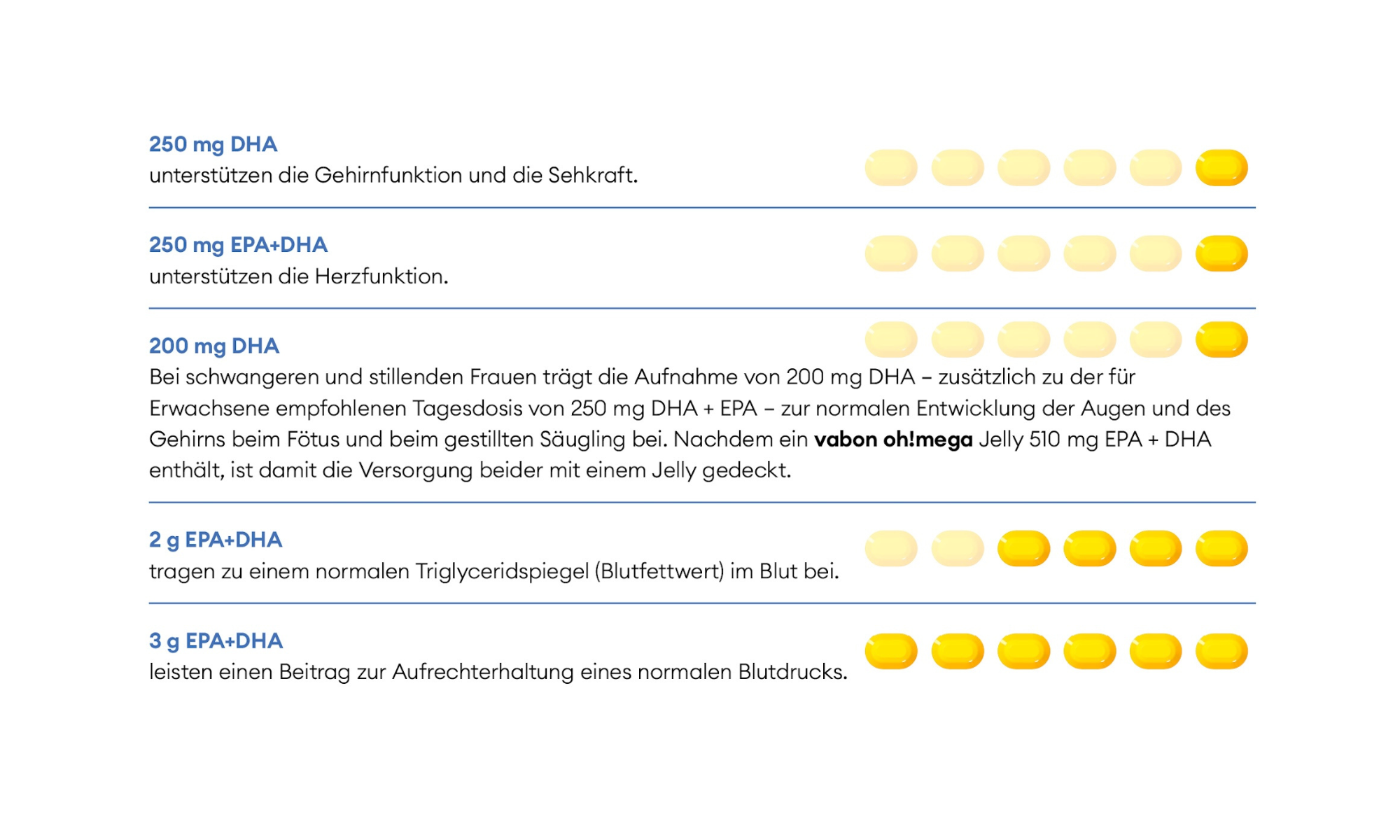
- With a daily intake of at least 250 mg DHA, DHA contributes to the maintenance of normal brain function and normal vision.
- With a daily intake of at least 200 mg DHA, in addition to the recommended daily dose of omega-3 fatty acids for adults (i.e., at least 250 mg DHA and EPA), the mother's intake of DHA contributes to the normal development of the eyes and brain in the fetus and breastfed infant.
- With a daily intake of at least 250 mg EPA and DHA, EPA and DHA contribute to normal heart function. With a daily intake of at least 2 g EPA and DHA (equivalent to 4 jellys), DHA and EPA contribute to the maintenance of normal blood triglyceride levels.
- With a daily intake of at least 3 g EPA and DHA (equivalent to 6 jellys), DHA and EPA contribute to the maintenance of normal blood pressure.
How does EPA (eicosapentaenoic acid) work?
- With a daily intake of at least 250 mg of EPA and DHA, EPA and DHA contribute to normal heart function.
- With a daily intake of at least 2 g of EPA and DHA (equivalent to 4 jellys), DHA and EPA contribute to the maintenance of normal blood triglyceride levels.
- With a daily intake of at least 3 g of EPA and DHA (equivalent to 6 jellys), DHA and EPA contribute to the maintenance of normal blood pressure.
Test your Omega-3 status
To determine the optimal dosage of your vabon oh!mega Jellys, you should take an omega-3 index test. With just one drop of blood, a specialized, independent lab analyzes your Omega-3 and Omega-6 levels and provides a recommendation for your intake. If you repeat the test after 3 months, you can see how your value has improved.
Each Omega-3 test includes all the equipment you need to perform the test. It also comes with detailed instructions for the test procedure and the steps afterward. It’s really simple and only requires a small prick on your finger.
The right balance of omega-3/omega-6 fatty acids is crucial
It is completely logical how important Omega-3 is. Our brain needs Omega-3 fatty acids because it consists of 60% fat, of which 20% are Omega-3 fatty acids. Numerous studies have shown that DHA has a positive effect on the brain and contributes to maintaining normal brain function and vision. During pregnancy and breastfeeding, it is especially recommended to consume Omega-3 to optimally support the infant and fetus.
For our health, it is not only the amount of Omega-3 we consume daily that matters, but especially the right balance between Omega-3 and Omega-6 fatty acids – because only then can both fatty acids optimally fulfill their functions in the body.
While an imbalance in favor of Omega-6 leads to silent inflammation and common lifestyle diseases, a good ratio has anti-inflammatory effects, improves blood flow properties, positively affects blood pressure, and more. However, the industrialization of food has increased the proportion of Omega-6 fatty acids in our daily diet.
An increasing imbalance in the intake between omega-6 and omega-3 fatty acids was the result. Instead of the ideal ratio of omega-6 to omega-3 of 3:1, the actual ratio for an average European today is around 12:1.

Fair, Sustainable, Transparent
The omega-3 fatty acids in vabon oh!mega come from 100% traceable, sustainably caught fish that is Friend of the Sea® certified. This guarantees that fish stocks are protected and the marine environment is preserved.

Certified Quality
The product quality of vabon oh!mega is tested and certified according to the strict BRC (British Retail Consortium) Global Standard.
Our packaging materials are carefully selected to minimize environmental impact while protecting the valuable nutrients as best as possible, not only to leave a positive ecological footprint but also to guarantee our customers a first-class product. Our commitment to quality and sustainability is reflected in every aspect of vabon oh!mega to ensure that our customers benefit not only health-wise but also in an environmentally conscious way.
vabon oh!mega was developed in Austria and is produced in Norway under the highest quality standards and with patented technology.
For a better life
We deal daily with everything that belongs to a healthy lifestyle, look for causes, and think about solutions. Our philosophy is to provide the body with the right nutrients in the highest quality.
At vabon, not only the effectiveness of our products is important to us, but also how and from which sources they are made. For our vabon oh!mega, we select only the highest quality ingredients that meet strict sustainability criteria. Every step in production is designed to ensure both environmental standards and social responsibility.
Customer reviews
Carina
vabon oh!mega has finally made Omega-3 practical for everyday use for me. I take it daily and have the good feeling of supporting my brain and vision function – and my heart as well. I also find the taste very pleasant, fresh, and fruity, completely without any fish aftertaste. vabon oh!mega is an essential part of my health routine.
Eleonore
I struggled with energy deficiency and other complaints due to the regular care of my parents. After just six months with vabon fierce, vabon apex, and vabon oh!mega, my life has completely changed. My complaints have almost completely disappeared, and my energy is back. These products have become a crucial factor for my well-being.
Miriam
What vabon oh!mega means to me: It’s the small daily ritual that takes care of big things in the background. I stay focused on what matters and feel like I’m reliably supporting my body’s functions – without much effort. One vabon oh!mega jelly as a dessert after lunch, and it’s done – quick, easy to digest, and now an essential part of my day.
What science says about Omega-3
Heart
von Schacky C. Omega-3 Fatty Acids in Cardiovascular Disease - an Uphill Battle. PLEFA2015;92:41-7
Available here for reading.
Harris WS, Gonzales M, Laney N, Sastre A, Borkon AM. Effects of Omega-3 Fatty Acids on Heart Rate in Cardiac Transplant Recipients. Am J Cardiol 2006;98:1393-5.
Available here for reading.
Harris WS, Poston WC, Haddock CK. Tissue n-3 and n-6 fatty acids and risk for coronary heart disease events. Atherosclerosis 193:1-10, 2007.
Available here for reading.
Brain
von Schacky C. Brain Structure and Brain Function: Role of Omega-3 Fatty Acids. Z OrthomolMed2014;1:20-4
Available here for reading.
Pottala JV, Yaffe K, Robinson J, Espeland MA, Wallace R, Harris WS. Higher RBC EPA+DHA corresponds with larger total brain and hippocampal volumes: WHIMS-MRI study. Neurology2014;82:435-42
Available here for reading.
Tan ZS, Harris WS, Beiser AS, Au R, Himali JJ, Debette S, Pikula A, DeCarli CS, Wolf PA, Vasan RS, Robins SJ, Seshardi S. Red Blood Cell Omega-3 Fatty Acid Levels and Markers of Accelerated Brain Aging. Neurology2012;78:658-64
Available here for reading.
Sports and Muscles
von Schacky C, Kemper M, Haslbauer R, Halle M. Low HS-Omega-3 Index in 106 German elite winter endurance athletes: a pilot study. Int J Sport Nutr Exerc Metab. 2014;24:559-64.
Available here for reading.
Kim J, Lee J. A review of nutritional intervention on delayed onset muscle soreness. Part I. J Exerc Rehabil. 2014;10:349-56
Available here for reading.
von Schacky C. Omega-3 fatty acids in sports. Vitalstoffe 2015, ;5/4:10-16
Available here for reading.
Skin
Gardner KG, Martinez FD, Wright AL, et al. Prenatal Omega-3 and Omega-6 Polyunsaturated Fatty Acids and Childhood Atopic Dermatitis. J Allergy Clin Immunol Pract. 2020;8(3):937–944.
Available here for reading.
Gürtler A, Fiedler T, Lill D, Kuna AC, Volsky A, Wallmichrath J, Kämmerer T, French LE, Reinholz M. Deficit of Omega-3 Fatty Acids in Acne Patients
Available here for reading.
A Cross-Sectional Pilot Study in a German Cohort. Life 2024,14, 519 - Guertler A, Neu K, Lill D, Clanner-Engelshofen B, French LE, Reinholz M. Exploring the potential of omega-3 fatty acids in acne patients: A prospective intervention study. J Cosmet Dermatol. 2024,23: 3295-3304, epub Jul 10.
Available here for reading.
Eye
Rutledge GA, Pratt SG, Richer SP, Huntjens B, Perry CB, Pratt G, Podella C. Foveal macular pigment dip in offspring of age-related macular degeneration patients is inversely associated with omega-3 index. BMC Ophthalmol. 2020 Dec 2;20(1):473.
Available here for reading.
Elmore A, Harris WS, Mu L, Brady WE, Hovey KM, Mares JA, Espeland MA, Haan MN, Millen AE. Red blood cell fatty acids and age-related macular degeneration in postmenopausal women. Eur J Nutr. 2022 Jan 6.
Available here for reading.
JM, Micha R, Lemaitre RN, Mozaffarian D, Risérus U; Cohorts for Heart and Aging Research in Genomic Epidemiology (CHARGE) Fatty Acids and Outcomes Research Consortium (FORCE). Biomarkers of Dietary Omega-6 Fatty Acids and Incident Cardiovascular Disease and Mortality. Circulation. 2019;139:2422-2436.
Available here for reading.
Psychological factors
Amin AA, Menon RA, Reid KJ, Harris WS, Spertus JA. Acute Coronary Syndrome Patients With Depression Have Low Blood Cell Membrane Omega-3 Fatty Acid Levels. Psychosom Med 2008;70:856-62.
Available here for reading.
Carney RM, Freedland KE, Stein PK, Steinmeyer BC, Harris WS, Rubin EH, Krone RJ, Rich MW. Effect of Omega-3 Fatty Acids on Heart Rate Variability in Depressed Patients with Coronary Heart Disease. Psychosom Med 2010;72:748-54.
Available here for reading.
21. Baghai TC, Varallo-Bedarida G, Born C, Häfner S, Schüle C, Eser D, Rupprecht R, Bondy B, von Schacky C. Major depression is associated with cardiovascular risk factors and low Omega-3 Index. J Clin Psychiat 2011;72:1242-7. Epub 2010 Dec 14.
Available here for reading.
Pregnancy and Fertility
von Schacky C. Omega-3 Fatty Acids in Pregnancy – the case for a target Omega-3 Index. Nutrients 2020, 12, 898
Available here for reading.
Jackson KH, Harris WS. Harmonizing blood DHA levels in pregnancy studies: An interlaboratory investigation. ProstaglandinsLeukotEssent Fatty Acids. 2022Apr;179:102417.
Available here for reading.
Eskew AM, Wormer KC, Matthews ML, Norton HJ, Papadakis MA, Hurst BS. The association between fatty acid index and in vitro fertilization outcomes. J AssistReprodGenet. 2017 Sep 13
Available here for reading.
Products that might also interest you:

Type: For health, energy & zest for life
Balance Pack+
Frequently Asked Questions
Is overfishing and sustainable fishing taken into account during the production of vabon oh!mega?
Is overfishing and sustainable fishing taken into account during the production of vabon oh!mega?
Sustainable production of vabon oh!mega and the prevention of overfishing are very important to us! Therefore, our Omega-3 product vabon oh!mega is also tested and certified according to the strict standards of the Friend of the Sea certificate, which guarantees sustainable and stock-preserving fishing as well as the protection of the seabed and marine biodiversity. In addition, the vabon Omega-3 fatty acid product is also purified from any contaminants.
Are heavy metals present in fish oil?
Are heavy metals present in fish oil?
The fish oil contained in vabon oh!mega is purified from all environmental pollutants, PCBs, and heavy metals. Through an innovative and unique purification process, not only are the legally required standards far exceeded, but also those of the IFOS* 5-star rating and the demanding self-imposed targets of GOED (Global Organization for EPA and DHA Omega-3 Fatty Acids), as can be clearly seen from the table. Thus, contamination of the product is excluded.
How long do I need to take vabon oh!mega to notice an effect?
How long do I need to take vabon oh!mega to notice an effect?
To experience the positive effects of vabon oh!mega, your diet plan should include at least 1 jelly daily for a longer period of time, at least 4 months.
Why 4 months?
120 days is the average lifespan of erythrocytes. Erythrocytes absorb EPA and DHA from their surroundings during cell regeneration. This means that only after 120 days are the erythrocytes completely renewed and an effect noticeable.
What does vabon oh!mega offer you?
What does vabon oh!mega offer you?
vabon oh!mega is a super tasty, high-dose omega-3 product with a total of 600 mg omega-3 fatty acids, including 362 mg DHA and 148 mg EPA – without aftertaste and without unpleasant burping – thanks to patented and 100% natural technology! And all without sugar! Kids love it too!
Which fish oil is used in vabon oh!mega?
Which fish oil is used in vabon oh!mega?
Our Omega-3 product consists of a fish oil concentrate with 90% triglycerides. In this natural form, Omega-3 fatty acids are up to 400% more bioavailable according to studies than common ethyl ester fish oil concentrates on the market, which do not contain triglycerides and are therefore less well absorbed by the body. Additionally, the Omega-3 Jellys are 44% more bioavailable compared to softgel capsules.
Typical triglyceride oils available on the market usually have a triglyceride content of 50%-60%. However, with vabon oh!mega, we decided to aim higher and ultimately achieved a triglyceride content of 90%, which makes our Omega-3 product significantly more bioavailable compared to common preparations! This has established vabon oh!mega as a global pioneer in this field.
Why is vabon oh!mega made from fish oil concentrate?
Why is vabon oh!mega made from fish oil concentrate?
At vabon oh!mega, fish oil concentrate is used because, unlike conventional fish oil, only in this way can the high concentration of 362 mg DHA and 148 mg EPA be achieved in one jelly.
Why is it important to use a fish oil concentrate with the highest possible triglyceride content?
Why is it important to use a fish oil concentrate with the highest possible triglyceride content?
Oils naturally consist of triglycerides. In addition to the re-esterified concentrate in triglyceride form contained in vabon oh!mega, which is obtained through innovative molecular distillation processes, there is also conventional fish oil and the cheap, less bioavailable ethyl ester concentrate.
The re-esterification step in the production of the oil concentrate from vabon oh!mega is indeed more expensive and time-consuming than sticking with ethyl ester concentrate, but it is worth it because:
- Triglyceride fish oil concentrates are up to 400% more bioavailable than ethyl ester fish oil concentrates, meaning a significantly larger portion of the EPA and DHA contained in the triglyceride fish oil concentrate can be absorbed and used by the body.
- Triglyceride fish oil concentrate oxidizes much more slowly than ethyl ester fish oil concentrates! What does that mean? Oxidation means that a molecule chemically breaks down and, in the case of dietary supplements, becomes unusable. Various studies show that ethyl ester fish oil concentrates oxidize faster at every temperature than triglyceride fish oil concentrates – so they last significantly longer than ethyl ester fish oil concentrates.
- Triglyceride fish oil concentrate is significantly more efficient at lowering circulating blood lipid levels than ethyl ester fish oil concentrate. This is because the unnatural chemical bond of the ethyl esters must be broken down differently. First, enzymes must break the bonds between ethanol and the fatty acids in the EE concentrate and then attach them to glycerol to form triglycerides, which can then be better absorbed by the body.
How is the fish oil extracted?
How is the fish oil extracted?
Our fish oil concentrate comes from small fish from different regions to avoid overfishing, ensuring sustainable and strictly regulated fishing – certified according to the strict standards of the Friend of the Sea certificate!
In total, 90% of the caught fish come from Peru, while the other 10% are caught in other waters in the interest of sustainability.
The traceable fishing is processed directly on site on the ship under EU hygiene regulations into raw material and cleaned of contaminants such as heavy metals. For vabon oh!mega, the good, meaty parts are used, and the leftovers are then used for further processing.
After the raw material is obtained, the fish oil is shipped for further processing and processed into the final product, vabon oh!mega.
Why is vabon oh!mega not vegan and made from algae?
Why is vabon oh!mega not vegan and made from algae?
vabon oh!mega is not made from algae oil because the high concentration of 362 mg DHA and 148 mg EPA in our product would not have been possible. Additionally, algae oil contains a very low or no EPA content. Another reason we decided against an algae oil product is the very intense taste of algae oil, which would have posed a problem during production.
What distinguishes vabon oh!mega from conventional Omega-3 products?
What distinguishes vabon oh!mega from conventional Omega-3 products?
vabon oh!mega convinces with
- a very high omega-3 fatty acid content of 600 mg per jelly, including 362 mg DHA and 148 mg EPA
- a patented natural technology that ensures the jellies have no fishy taste and cause no burping, and INCREASES BIOAVAILABILITY by 44% compared to softgels
- a significantly higher bioavailability than conventional fish oil concentrate products, as our fish oil concentrate consists of 90% triglycerides. In this natural form, omega-3 fatty acids are up to 400% more bioavailable than in common ethyl ester (EE) fish oil concentrates and 44% more bioavailable than softgels, according to studies.
Why do triglycerides help lower the triglyceride level in the blood?
Why do triglycerides help lower the triglyceride level in the blood?
Triglycerides are a type of fat found in the blood.
After eating, the body converts unused calories into triglycerides and stores them in fat cells to use later for energy. However, too many triglycerides in the blood can increase the risk of heart disease.
Omega-3 fatty acids, provided to the body in triglyceride form, help lower blood fat levels by reducing the production of lipoproteins in the liver and assisting in their faster removal from the blood. This process reduces blood fat levels, decreases inflammation in blood vessels, and helps prevent cardiovascular diseases.
In the case of omega-3 oils, triglyceride is simply the form of the fatty acid molecules that allows EPA and DHA to be better absorbed by the body—and the higher the bioavailability, the better and faster omega-3 is taken up by the body.
The re-esterification step in the production of vabon oh!mega is more expensive and time-consuming than leaving it as an ethyl ester concentrate, but it is worth it because the fish oil concentrate in vabon oh!mega consists of 90% triglycerides and is, according to studies, about 400% more bioavailable than common ethyl ester fish oil concentrates!
What is the difference compared to other vabon products?
What is the difference compared to other vabon products?
vabon essentials & vabon fierce serve to provide comprehensive supply of all essential nutrients, vitamins, and minerals, strengthening the immune system among other things and providing energy for the day. vabon apex is an all-round talent when it comes to muscle building, weight loss, or joints.
So far, it has not been possible to incorporate Omega-3 flavorlessly into the existing products, as the fatty acid has a very distinctive fishy taste that would have strongly affected the taste experience of vabon essentials, vabon fierce, and vabon apex. Additionally, it is difficult to keep Omega-3 fatty acids stable – especially in liquids.
Therefore, we decided to develop a new dietary supplement. With vabon oh!mega, there is now a product on the market that optimally supplies the body with the most important Omega-3 fatty acids, tastes deliciously fruity, and supports your health in addition to vabon essentials, vabon fierce, and vabon apex.
What are omega-3 fatty acids?
What are omega-3 fatty acids?
Omega-3 fatty acids are among the essential fatty acids in the group of polyunsaturated fatty acids. This means the body cannot produce Omega-3 on its own and must therefore obtain these fatty acids through food.
Omega-3 is the general term for a group of different fatty acids, including EPA (eicosapentaenoic acid), DHA (docosahexaenoic acid), and ALA (alpha-linolenic acid). Studies show that the two Omega-3 fatty acids EPA and DHA have proven effects on health. However, EPA and DHA are mainly found in fatty fish and algae oil, whereas ALA is found in some plant-based foods such as flaxseed oil, flaxseeds, or wild rice.
Why are omega-3 fatty acids important?
Why are omega-3 fatty acids important?
Omega-3 fatty acids have numerous health-promoting effects in the body, such as supporting heart and brain function and vision. They contribute to maintaining normal blood pressure and help maintain normal blood lipid levels. They also support the normal development of the eyes and brain in the fetus and breastfed infant during pregnancy and breastfeeding.
How many omega-3 fatty acids are beneficial?
How many omega-3 fatty acids are beneficial?
The WHO, EFSA, and the German Nutrition Society recommend a daily minimum intake of 250 mg DHA and EPA – that means 1 jelly per day.
What proportion of EPA and DHA does vabon oh!mega contain?
What proportion of EPA and DHA does vabon oh!mega contain?
In a vabon oh!mega jelly, there are 600 mg of omega-3 fatty acids, including 362 mg DHA and 148 mg EPA, to guarantee the positive effects of both omega-3 fatty acids.
What is the difference between EPA & DHA?
What is the difference between EPA & DHA?
Omega-3 is the general term for a group of different fatty acids. Studies show that EPA (Eicosapentaenoic acid) & DHA (Docosahexaenoic acid) have the most proven positive effects on health.
About 30% of the structural fats in the brain consist of DHA. That is why DHA is so important for brain activity and cognitive performance, learning ability, reaction time, and many other neurological processes that influence mental performance.
DHA is also an important component of the retina and supports, among other things, the ability to see in light and dark. This clearly shows how important an adequate supply of docosahexaenoic acid is for our vision.
EPA is especially important because it supports our heart function, regulates blood pressure, and contributes to normal blood lipid levels.
Overall, docosahexaenoic acid is attributed with more health benefits than eicosapentaenoic acid, which is why vabon oh!mega contains more than twice as much DHA as EPA.
How much omega-3/-6 fatty acids does a person need?
How much omega-3/-6 fatty acids does a person need?
For our health, it is not only the amount of omega-3 we consume daily through our diet that matters, but especially the correct ratio between omega-3 and omega-6 fatty acids – because only then can both fatty acids optimally exert their effects in the body.
The omega-6 fatty acids in the body act as components of cell membranes and are needed for growth and repair processes, promoting the development of inflammation as part of the immune defense. This can be particularly helpful during infections, as the development of inflammation can help fight off dangerous pathogens. Another effect of omega-6 fatty acids is an increased tendency for blood clotting and narrowing of the blood vessels. This is especially beneficial in the case of more severe injuries. The faster the vessels narrow and the quicker the platelets clump together, the less blood the body loses.
Omega-6 fatty acids are thus the natural counterpart to omega-3 fatty acids, which inhibit inflammatory processes, dilate the vessels, and reduce the thickness of the blood so that it can flow better through the vessels and does not clot inside them. A balanced ratio between omega-3 and omega-6 fatty acids in the body is therefore very important for health.
However, the industrialization of food has increased the proportion of omega-6 fatty acids in our daily diet. Since both fatty acids share the same metabolic pathways, this has led to an increasing imbalance in the intake between omega-6 and omega-3 fatty acids.
Instead of the ideal ratio between omega-6 and omega-3 of 3:1 up to a maximum of 5:1, the actual ratio for an average European today is around 12:1.
When should I take vabon oh!mega?
When should I take vabon oh!mega?
We recommend taking vabon oh!mega once daily with meals – regardless of the time of day.
It is important not to take vabon oh!mega on an empty stomach, as the bioavailability of the omega-3 fatty acids is significantly increased when taken with fat.
How do you take vabon oh!mega?
How do you take vabon oh!mega?
It is best to take vabon oh!mega with or after a meal, as omega-3 fatty acids are better absorbed and utilized by the body this way – bioavailability is significantly increased.
Can vabon oh!mega also be taken by children?
Can vabon oh!mega also be taken by children?
Yes, vabon oh!mega can also be taken by children. Omega-3 fatty acids play an important role in the development of the brain and vision – especially in childhood. Since the body cannot produce these on its own, adequate intake through diet or targeted supplementation – such as with vabon oh!mega – is important.
How much vabon oh!mega should children take?
How much vabon oh!mega should children take?
There is no universal recommendation for daily omega-3 intake for children. The requirement can vary depending on age, body weight, and diet. As a simple guideline: 1 jelly per day is generally sufficient for children. Those who want to know more precisely can determine their individual omega-3 status through the omega-3-index-test. This allows for targeted adjustment of intake and optimization over a period of several months if necessary. With vabon oh!mega, daily omega-3 intake can be easily and conveniently integrated into everyday life.
Why is Omega-3 especially important for children?
Why is Omega-3 especially important for children?
Omega-3 fatty acids – especially DHA – contribute to the normal development of the brain and vision. A good supply is particularly important during growth phases, as the brain and nervous system are still developing. Regular intake of vabon oh!mega can help to sensibly supplement the daily intake.
What is the advantage of vabon oh!mega for children?
What is the advantage of vabon oh!mega for children?
Many children (and also adults) are reluctant to take classic Omega-3 products like capsules or oil.vabon oh!mega offers a simple solution here:
- fruity jellies instead of fish taste
- no capsules, no unpleasant burping
This makes the daily intake with vabon oh!mega easier to become a routine – even for children.
What does vabon oh!mega do during pregnancy?
What does vabon oh!mega do during pregnancy?
Omega-3 fatty acids are important for the development of the brain and vision of the fetus and breastfed infant. Studies show that the baby's brain develops better when the mother consumes enough Omega-3 during pregnancy.
And the EFSA (European Food Safety Authority) has also confirmed the following positive effects of DHA and EPA in pregnant and breastfeeding women: The intake of 200 mg DHA – in addition to the recommended daily dose of 250 mg DHA + EPA for adults – contributes to the normal development of the eyes and brain in the fetus and breastfed infant.
Since one vabon oh!mega Jelly contains 600 mg Omega-3, of which 510 mg are EPA + DHA, this amount is sufficiently covered with just one Jelly.
Can side effects occur when consuming vabon oh!mega?
Can side effects occur when consuming vabon oh!mega?
No, no side effects are known.
Can you overdose on vabon oh!mega, and if so, what happens then?
Can you overdose on vabon oh!mega, and if so, what happens then?
Up to the maximum daily dosage of 5 g DHA and EPA recommended by EFSA, there can be no overdose.
If an overdose does occur, a weakened immune system and blood thinning may be possible side effects.
How long does vabon oh!mega last and how should I store it best?
How long does vabon oh!mega last and how should I store it best?
vabon oh!mega should be stored at 5-25° until the expiration date.
Due to the unique technology used in the production of vabon oh!mega, the oxidation levels of our concentrate are more than half below the limits set by GOED (Global Organization for EPA & DHA Omega-3 Fatty Acids). This also makes our concentrate particularly neutral in taste and less prone to oxidation.
Does the fish oil contained in vabon oh!mega have the "Friend of the Sea" certification?
Does the fish oil contained in vabon oh!mega have the "Friend of the Sea" certification?
Yes, vabon oh!mega is certified with the Friend of the Sea seal because the sustainability of our products is very important to us.
How do I test my Omega-3 levels?
How do I test my Omega-3 levels?
Omega-3 levels can be measured directly by your family doctor through a blood test, which is then analyzed in a laboratory. After the blood analysis is completed, you receive information about the Omega-3 index and the Omega-6 to Omega-3 ratio and can discuss further steps with your doctor.
Do you want to take your health into your own hands?
That’s no problem with the VABO-N Omega-3 Self-Test including analysis in a specialized fatty acid laboratory.
Simple sample collection at home. Get your test kit for fatty acid analysis now!
What is the cause of an omega-3 deficiency?
What is the cause of an omega-3 deficiency?
The cause of an omega-3 deficiency is that in everyday life, not enough omega-3-rich foods are consumed, while too many omega-6-rich foods are eaten. Since both unsaturated fatty acids share a common metabolic process, the excess of omega-6 fatty acids ensures that only small amounts of omega-3 fatty acids can be absorbed.
A key reason for this is the industrialization of food, which has increased the proportion of omega-6 fatty acids in the daily diet and thus promoted a growing imbalance in the intake between omega-6 and omega-3 fatty acids.
Who are omega-3 fatty acids especially important for?
Who are omega-3 fatty acids especially important for?
For everyone!
Omega-3 fatty acids should be consumed sufficiently by everyone to ensure the numerous health benefits, such as supporting heart and brain function and vision, maintaining normal blood pressure, and contributing to normal blood lipid levels.
Additionally, omega-3 supports the normal development of the eyes and brain in the fetus and breastfed infant during pregnancy or breastfeeding.
How much Omega-3 does an athlete need?
How much Omega-3 does an athlete need?
During sports, aggressive compounds are formed in the body that, together with exercise-related muscle injuries, cause inflammation throughout the body. The consequences are a prolonged recovery process and often a reduction in physical well-being, such as muscle pain.
Therefore, high omega-3 intake, exceeding the WHO's recommended daily value of 250 mg, is advised for competitive athletes. vabon oh!mega more than covers this dosage. With a total of 600 mg omega-3 per jelly, including 362 mg DHA and 148 mg EPA, vabon oh!mega is optimal for every competitive athlete!
Where are omega-3 fatty acids found?
Where are omega-3 fatty acids found?
Plant oils and nuts & seeds initially appear to have high ALA levels, but DHA and EPA are the two omega-3 fatty acids that are most beneficial to our body. Our body can basically convert ALA into EPA and then into DHA, but only to a very small extent. The conversion rate of ALA to EPA and DHA varies greatly from person to person and depends on various factors (age, gender, metabolism, etc.). In the worst case, less than 10% is converted to EPA and only about 0.5% to DHA. Since most plant oils are rich in omega-6 fatty acids, large amounts are consumed. This blocks the conversion of alpha-linolenic acid into the biologically more active EPA. Therefore, the mentioned omega-3-rich plant oils are not a reliable source for sufficient supply of biologically active omega-3 fatty acids but rather serve as a supplement to fish.
From this, it can be seen that one would have to eat all these foods in large quantities daily to adequately meet the daily minimum omega-3 requirement.
vabon oh!mega contains 600 mg of omega-3 in just one super tasty jelly, including 362 mg DHA and 148 mg EPA, thus far exceeding the WHO recommended daily minimum intake of 250 mg DHA and EPA.
Notes & Health Claims
Note: May have a laxative effect if consumed excessively. Do not exceed the recommended daily intake. Dietary supplements are not a substitute for a varied diet. A varied and balanced diet as well as a healthy lifestyle are important. Keep out of reach of children. Suitable for children, pregnant and breastfeeding women. Storage: avoid direct sunlight. Ideal at 5 - 25°C.
Note on the product advertising text according to the European Health Claims Regulation: DHA contributes to the maintenance of normal brain function and normal vision. * EPA and DHA contribute to normal heart function. ** DHA contributes through the mother to the normal development of the eyes and brain in the fetus and breastfed infant. *** A daily intake of at least 2 g EPA and DHA (equivalent to 4 jellys) contributes to the maintenance of normal blood triglyceride levels. A daily intake of at least 3 g EPA and DHA (equivalent to 6 jellys) contributes to the maintenance of normal blood pressure. Intake of 5 g DHA and EPA should not be exceeded. Dietary supplements are not a substitute for a balanced and varied diet and a healthy lifestyle.* Positive effect with a daily intake of 250 mg DHA.** Positive effect with a daily intake of 250 mg DHA & EPA.*** Positive effect with a daily intake of at least 200 mg DHA, in addition to the recommended daily dose of omega-3 fatty acids for adults (i.e., at least 250 mg DHA and EPA)
