

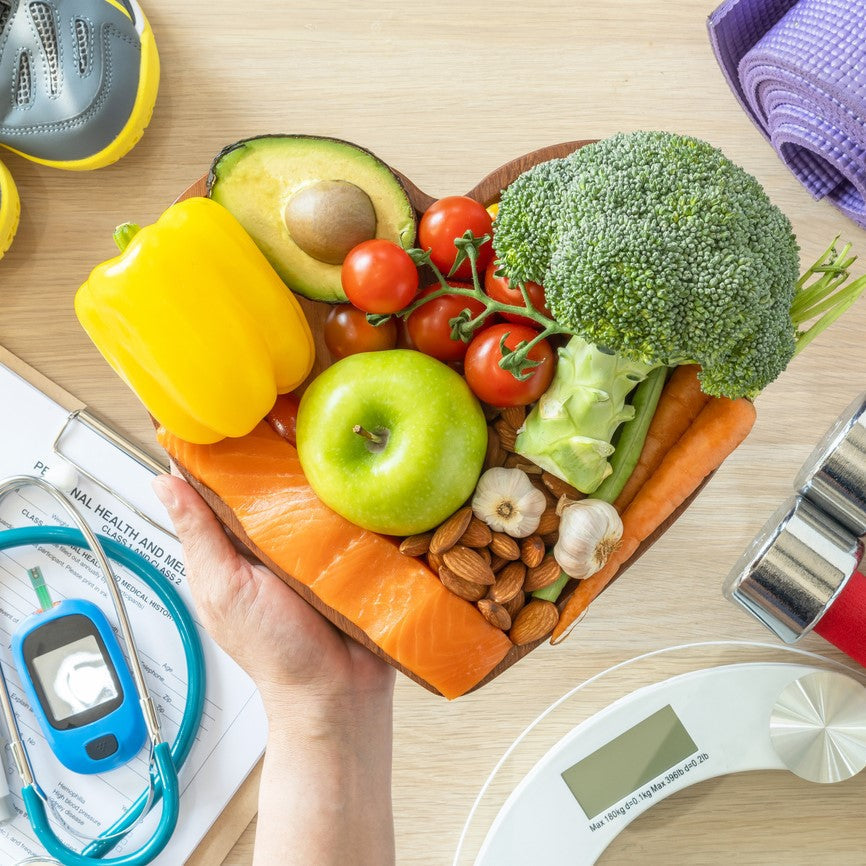
Your heart beats 50 to 100 times per minute, pumping about five to six liters of blood through your body – an incredible performance that our heart accomplishes every day to keep us alive.
To ensure it continues to beat strongly into old age and can perform all its functions, it must be treated with care. Regular exercise, a low-fat diet, and avoiding cigarettes are, for example, factors that contribute to your heart Health.
Heart diseases are increasing
Coronary heart diseases (the calcification of the vessel walls, which leads to circulatory disorders and thus impairs the oxygen supply to the heart muscle), arrhythmias, circulatory disorders of the heart vessels, heart attack, heart failure, or angina pectoris (chest tightness) are all heart diseases that have become increasingly common in recent years! Cardiovascular disease is now by far the leading cause of death in Austria, with about 34,000 people affected annually.
The reasons are easy to find, as factors such as high blood pressure, overweight, elevated blood lipid levels, little exercise, stress, smoking, and vascular calcifications greatly contribute to heart diseases.
The good news? You can do something good for your heart yourself!
7 tips for a healthy heart
How does your heart fall in love with you? By giving it attention and care!
Here are our top tips to make your heart shine:
1) Exercise and strengthen your heart muscle
At least 30 minutes of activity per day, such as walking, jogging, cycling, swimming, or even climbing stairs, strengthens your heart because the body requires more energy and oxygen during exertion, causing the heart to beat faster. When the heartbeat accelerates, more blood is pumped into the body, and the heart muscle is trained – so exercise is always a workout for your heart!
2) Watch your weight
Overweight promotes the development of arteriosclerosis, a connective tissue hardening of the arteries, which in turn can lead to coronary heart diseases and even a heart attack. To prevent this, it is important to keep your body weight in a healthy range, as this greatly eases the work of your heart. The apex concept from vabon can support you in shedding pounds and ensures you feel great overall – which will probably please not only your heart! 😉
3) Give up cigarettes
Nicotine raises blood pressure and narrows blood vessels. Additionally, the carbon monoxide in cigarettes irritates the inner lining of blood vessels, making it easier for fat to deposit in the vessels. Especially the regularity of cigarette consumption can double to quadruple the risk of coronary heart disease or angina pectoris, which in turn can trigger a heart attack.
P.S.: For those who only smoke occasionally & especially like to do so when a glass of wine or a bottle of beer is involved: Excessive alcohol consumption is also a potential risk factor for cardiovascular diseases! So it’s best to kill two birds with one stone & minimize both! 😉
4) Schedule preventive check-ups – your heart should see a doctor from time to time
It is especially important to monitor blood lipid levels such as cholesterol & triglycerides, because the higher these are, the greater the risk of cardiovascular disease. In Austria, there is the privilege of having a free health check-up once a year from the age of 18. This service should be used to exclude or detect heart diseases or other illnesses early.
5) Don’t salt away your heart health
Too many cooks spoil the broth – or in this case: too much salt spoils your heart health! Because it raises blood pressure, which can have serious effects on blood vessels, as high blood pressure can damage the vessel walls. The WHO recommends a maximum of 5 grams per day, which is about one teaspoon.
Our tip: Instead of reaching for the usual salt – how about experimenting with herbs and spices? They can give your food a variety of surprising and delicious notes! 😉
6) Less stress, more time for what makes you feel good
Stress reactions are the physical and mental responses to stressors that disrupt internal balance. Stress hormones (biochemical messengers) are released, causing the body to release energy reserves in preparation for stressful situations. This increases blood pressure and reduces oxygen supply. Physical activity that is enjoyable can help – because it deactivates stress hormones and the sympathetic nervous system (part of the autonomic nervous system responsible for the body’s response to stress), which positively affects the cardiovascular system, reduces the heart muscle’s oxygen demand, and slows the heartbeat back down.
7) Pay attention to the right ratio of Omega-3 and Omega-6 fatty acids
For our Health, not only the amount of Omega-3 we consume daily is crucial, but especially the correct ratio between Omega-3 and Omega-6 fatty acids – because only then can both fatty acids optimally fulfill their functions in the body. While an imbalance favoring Omega-6 leads to silent inflammation and common lifestyle diseases such as heart and vascular diseases or high blood pressure, a good ratio has anti-inflammatory effects, improves blood flow properties, positively affects blood pressure, and thus benefits the cardiovascular system.
However, industrialization of food has increased the proportion of Omega-6 fatty acids in our daily diet. This has resulted in a growing imbalance in the intake of Omega-6 to Omega-3 fatty acids. Instead of the ideal ratio of Omega-6 to Omega-3 of 3:1, the actual ratio for an average European today is about 12:1.
How can you counteract this? By increasing your intake of Omega-3 fatty acids! With 600 mg Omega-3, including 362 mg DHA and 148 mg EPA, in a super tasty jelly, vabon oh!mega is the perfect buddy for your heart Health: It supports your heart function, contributes to normal blood lipid levels, and helps maintain normal blood pressure – the perfect lover for your heart, isn’t it?
PS: vabon oh!mega can do more than just support heart Health 😉
Sources:
https://www.minimed.at/medizinische-themen/herz-gefaesse/8-tipps-herzgesundheit/
https://www.gesundheit.gv.at/aktuelles/archiv-2012/statistik-todesursachen-2011
https://www.arteriosklerose.org/ursachen/
https://www.gesundheit.gv.at/leben/gesundheitsvorsorge/vorsorgeuntersuchung/inhalt
https://www.stiftung-gesundheitswissen.de/gesundes-leben/koerper-wissen/so-arbeitet-das-herz
https://www.apotheken-umschau.de/Koronare-Herzkrankheit
https://www.herzstiftung.de/Angina-pectoris.html
https://aok-erleben.de/zivilisationskrankheiten-welche-sind-das-eigentlich/
Note on the product advertising text according to the European Health Claims Regulation:
With a daily intake of at least 250 mg EPA and DHA, EPA and DHA contribute to normal heart function. With a daily intake of at least 2 g EPA and DHA (equivalent to 4 jellies), DHA and EPA contribute to the maintenance of normal triglyceride levels in the blood. With a daily intake of at least 3 g EPA and DHA (equivalent to 6 jellies), DHA and EPA contribute to the maintenance of normal blood pressure.


